What Not to Do in Scotland as a Tourist?
Passing places, the stricter drink-drive limit, midge season, castle ticketing and Highland distances: the mistakes that actually cost visitors time and money.

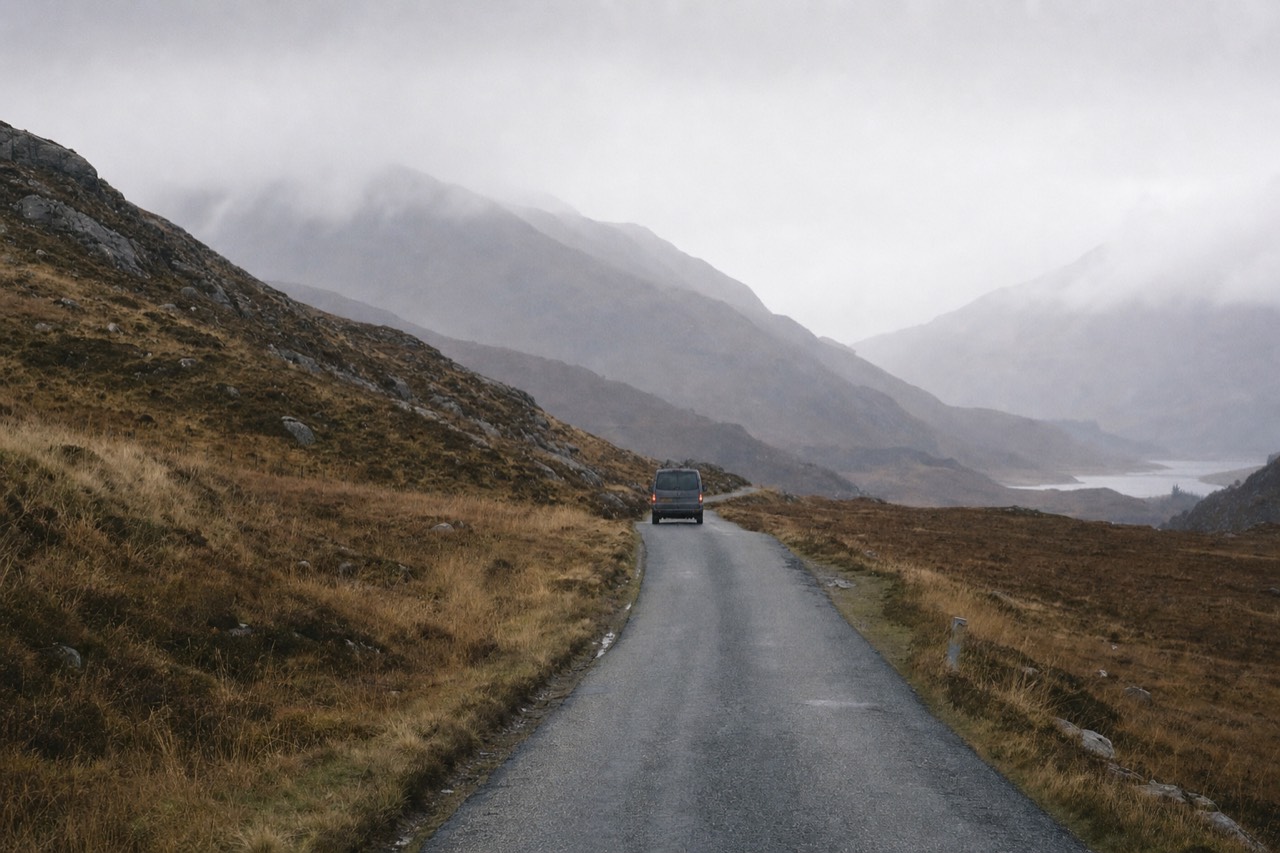
The mistakes that actually spoil a Scottish trip are rarely social ones. Locals are not waiting to be offended by your accent. What goes wrong is practical: a car parked where an ambulance needed to pass, a distillery day that ends with a driver who cannot legally drive home, a Skye itinerary that assumed a three-hour road was a one-hour road.
Here is the list worth reading before you go, built around the rules and seasons that genuinely catch visitors out.
Don't park in a passing place
Most Highland, Skye and island roads are single-track with marked passing places, and those places are working infrastructure rather than laybys. Park in one and you have blocked the only spot where a delivery lorry, a school bus or an ambulance can get past for the next half mile.
The etiquette is straightforward once you know it. Pull into a passing place on your left when a vehicle is coming toward you or someone behind wants to overtake; if the passing place is on your right, stop opposite it and let the other driver use it. Give way to traffic coming uphill. Road Safety Scotland's guidance for visiting drivers sets out the full version, and it is worth ten minutes before your first Highland day.
The other half of that rule: don't stop in the middle of the road for a photograph. Scotland's best views tend to arrive on the least suitable stretch of tarmac. If you would rather not deal with any of it, single-track driving and coach touring compared lays out what each option really involves.
Don't plan a distillery day around your own driving
Scotland's drink-drive limit is stricter than the rest of the UK, at 22 micrograms of alcohol per 100ml of breath, equivalent to 50mg per 100ml of blood, against a higher threshold in England and Wales. Plenty of visitors assume a UK-wide limit and are wrong by a meaningful margin. The current figures sit on mygov.scot.
Two more things worth knowing before you book a tasting. Licensed premises including distilleries serve alcohol to over-18s only, and Challenge 25 checks are routine, so bring photo identification even if you are comfortably past 25. Many distilleries also offer a driver's dram, where your tasting measure is decanted into a small bottle to take away, which solves the problem for whoever is behind the wheel.
The simplest fix is not to drive at all. Edinburgh's whisky venues are walkable from the city centre, and a guided Highland day with a driver included removes the question entirely.
Anyone building a trip around distilleries should start with distillery and whisky day trips, which compares the city experiences against the full-day runs into the Highlands.
Don't book peak midge weeks without a plan
Midges are real, they are seasonal, and pretending otherwise helps nobody. The season generally runs from late May to mid-September and peaks through July into early or mid August, at its worst on the west coast and in the northwest Highlands during calm, humid, overcast weather. Breezy ground, exposed coastline and the east side of the country all fare better. The Scottish midge forecast tracks conditions through the season.
This is not a reason to avoid summer. It is a reason to carry repellent, favour boat time and open ridges over sheltered lochside evenings, and keep still-air dusk walks short in July. If your dates are movable, midge season and the rest of the calendar sets out which weeks are worth dodging entirely.
Don't underestimate the distances
Scotland looks small on a map and drives large. The classic error is treating the Isle of Skye as a day trip from Edinburgh: it is not, and no day tour on this site attempts it. From Inverness, on the other hand, Skye and Eilean Donan Castle in one run works comfortably as a single long day, which is why those tours exist and the Edinburgh equivalents do not.
If Skye is the point of your trip rather than a stop on it, a multi-day package that sleeps on or near the island beats any day trip, and Skye tour choices covers the difference. The full set of Highlands and Skye day tours shows which departure points are realistic.
Don't turn up at a castle without checking the ticket
Scotland's right of responsible access is generous, and visitors sometimes read it as a right to walk into anything. The Scottish Outdoor Access Code covers most land and inland water, but it explicitly does not cover buildings, private gardens, growing crops or Historic Environment Scotland's Properties in Care. The Code itself is clear on where the line sits.
In practice that means timed tickets, seasonal opening hours and occasional conservation closures at the sites most people want to see. Buying at the gate also costs more: Historic Environment Scotland lists Edinburgh Castle at £23.50 online against £26 on the day, when tickets are available at all. A guided castle visit with entry included sidesteps the queue and the pricing question together.
More on which fortresses are worth a dedicated trip, and which are better seen as part of a Highland day, sits in castle visits and ticketing.
Don't assume ferries and mountain roads will cooperate
Winter snow gates can close specific Highland routes outright, among them the A939 between Cock Bridge and Tomintoul and the A93 over Glenshee. Ferry services to Skye and the Outer Hebrides are cancelled or rearranged for wind and swell often enough that a rigid island plan is a bad plan. Check Traffic Scotland and the ferry operator on the morning itself, and leave a spare day in any Hebrides or Orkney itinerary.
Packages that include their own ferry legs tend to handle the rescheduling for you, which is one of the underrated advantages of booking the route rather than assembling it.
Three small ones, quickly
- Scotland is not England, and the two have separate legal and education systems. It reads as careless to treat them as interchangeable.
- Scotch is the whisky, not the people. Scottish or Scots for the latter, and the spelling here has no "e" in it.
- Don't build a day around wearing a specific clan tartan you have researched online. Nobody minds a kilt; the earnest clan lecture is where it gets awkward.
The whole list, with the actual rule attached
Six mistakes, the rule each one runs into, and the cheapest way around it.
| The mistake | What the rule actually is | What to do instead |
|---|---|---|
| Parking in a passing place | Passing places exist for oncoming and overtaking traffic, and uphill traffic has priority | Carry on to the next one, or stop opposite a place that sits on your right |
| Driving after a distillery tasting | Scotland's limit is 22 micrograms per 100ml of breath, against 35 in England and Wales | Take the driver's dram home, or book a day where somebody else drives |
| Booking a still, humid west-coast week in July | Midge season runs late May to mid-September and peaks July into early August | Stay east or breezy, carry repellent, keep still-air dusk stops short |
| Treating Skye as a day trip from Edinburgh | No day tour here attempts it; the workable day runs leave from Inverness | Use an Inverness departure, or sleep on the route with a multi-day package |
| Turning up at a castle unbooked | The access code does not cover buildings or properties in care, and gate prices are higher | Book timed entry ahead, or take a tour with admission already inside the fare |
| Pinning an island plan to one sailing | Ferry crossings and Highland snow gates close for weather at short notice | Confirm on the morning, and keep a spare day in any Hebrides or Orkney plan |
What is considered rude in Scotland?
Practical inconsiderations far more than conversational ones: parking in a single-track passing place, stopping in the middle of a road for photos, and blocking a farm gate or a residential street in a small village. Treating Scotland as interchangeable with England lands badly too, though usually as a mild eye-roll rather than genuine offence.
Can you drink at a whisky tasting and still drive in Scotland?
Assume not. Scotland's limit is 22 micrograms per 100ml of breath, or 50mg per 100ml of blood, stricter than England and Wales, and a single tasting measure can carry you close to it. Many distilleries offer a driver's dram, decanted for you to take home, and guided tours remove the question entirely by supplying the driver.
Do midges ruin a Highland trip?
Between late May and mid-September, yes, particularly in July and early August on the west coast and in the northwest Highlands. Calm, humid, overcast evenings near sheltered water are the worst conditions. Wind, open coastline and the east of the country all help, as does repellent and timing outdoor stops away from dusk.
Is Scotland safe for tourists generally?
Yes, on the available evidence. Most of what catches out visitors is etiquette and logistics, not crime. For the actual data behind that claim, and why no accredited source publishes a real "worst place" ranking, see what the recorded-crime figures actually show.