When to Avoid Visiting Scotland?
The honest bad-timing list for Scotland: midge season on the west coast, August in Edinburgh, and the winter weeks when roads and ferries stop cooperating.

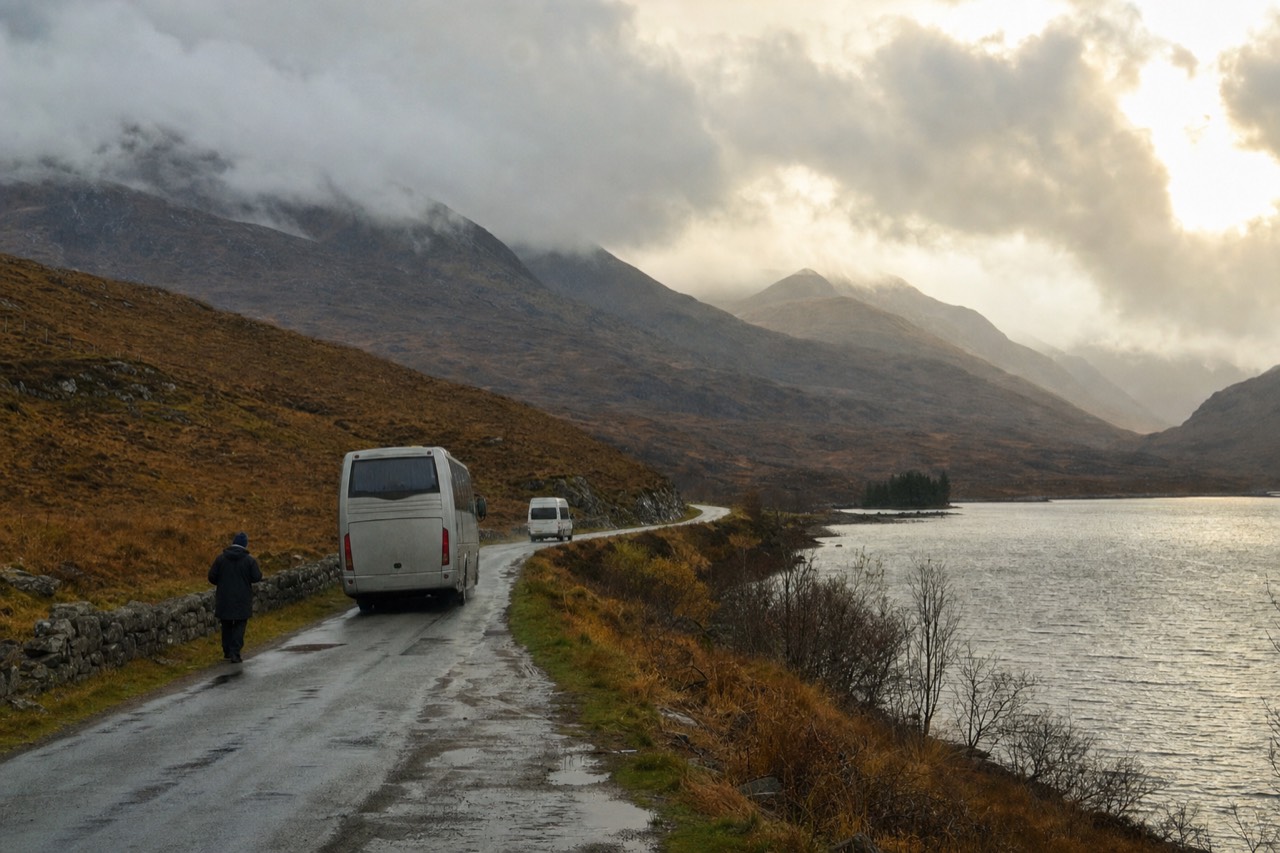
There is a specific kind of still, warm, overcast evening on the west coast in late July when the air near a loch shore starts to look grainy. That grain is a midge swarm. It is also the single most common reason travelers come back from the Highlands convinced they picked the wrong week.
So, the direct answer. Avoid calm, humid days on the west coast and northwest Highlands between roughly late May and mid-September if biting insects will ruin your mood, avoid Edinburgh through most of August unless the festivals are the reason you are coming, and treat late October to February as flexible-plans-only territory because daylight is short and weather closes roads and ferries. None of those windows is unbookable. They just punish a rigid itinerary.
Midge season is real, and it is regional
Scotland's biting midge season runs from about late May to mid-September, peaking in July and into early or mid August. The insects do worst in calm, humid, overcast conditions, and they are far more aggressive on the west coast and in the northwest Highlands than on breezy, exposed or east-coast ground. Edinburgh, Glasgow, St Andrews and most of the east are barely affected. APS Biocontrol runs a daily Scottish midge forecast that scores activity by region, which is more useful than any general "avoid summer" advice.
What that means in practice: a July walk along the Quiraing on a breezy day is fine. The same walk at dusk with no wind is not. Guided coach days spend most of their time moving between viewpoints, which is one honest reason a lot of summer visitors end up preferring a guided Glencoe and Loch Ness day to a self-drive plan with long stationary stops. If you are weighing that choice, the comparison in coach touring against driving yourself covers the trade-offs properly.
Most of August belongs to the festivals
Edinburgh's festival season fills the city for most of August. That is wonderful if you want it and expensive if you do not. Accommodation demand across the city peaks, popular restaurants book out, and the Royal Mile becomes a slow-moving crowd rather than a street. Day tours still depart on schedule, but pickup points get congested and the city itself is a poor base for a quiet trip.
Two honest workarounds. Base yourself in Glasgow or Inverness and treat Edinburgh as a day out, or shift the trip to the second half of September, when the weather is often still decent and the crowds have gone. Anyone weighing the cost side of that decision should read the month-by-month case for cheaper travel before locking dates.
Winter closes things you did not expect
The winter problem in Scotland is not really cold. Average maximum temperatures sit around 6°C in December, January and February, which is mild by northern-European standards, and VisitScotland's own seasonal weather summary puts summer highs only around 17°C, so the gap is smaller than people assume. The problems are daylight, access and reliability.
Around the winter solstice, Edinburgh gets under seven hours of daylight, and it is shorter still the further north you go. A "full-day" Highland tour in December is running its best scenery in flat light and finishing in the dark. Historic Environment Scotland and the National Trust for Scotland also run seasonal hours at many properties, with some sites closing entirely over winter and others holding partial access restrictions during conservation work, so a castle that was open in July may not be open at all in January. Water-level options hold up better: the short cruise past Urquhart Castle gives you the fortress from the loch without a gate to get through.
Then there is the movement problem. Specific Highland routes have snow gates that get closed in bad weather, including the A939 between Cock Bridge and Tomintoul and the A93 over the Glenshee pass, and Traffic Scotland is the place to check them on the day rather than the week before. Ferry crossings to Skye and the Outer Hebrides are cancelled or rerouted for wind and swell often enough through winter that no island itinerary should depend on one specific sailing. Book flexible, keep a spare day, confirm the morning of.
The months nobody warns you about
Two smaller traps. Scottish school holidays and UK bank-holiday weekends push demand onto the popular day tours and onto accommodation in Inverness, Fort William and Portree, which is a pricing problem more than an availability one. And late April to mid-May, often recommended as the sweet spot, genuinely is good, though a cold spring can leave higher hill roads and some mountain paths in worse shape than the calendar suggests.
If a bad-weather day lands in the middle of your trip, the city experiences are the useful fallback, because they run indoors and to a fixed timetable regardless of what the sky is doing. The barrel-ride whisky attraction on the Royal Mile is the cheapest of them. That is the real argument for keeping one indoor booking in reserve rather than trying to move a Highland day.
Month by month, what is working against you
| Period | What is working against you | Go anyway if |
|---|---|---|
| Late May to mid-Sept | Midges on the west coast and NW Highlands, worst in calm humid weather | You stay east, stay breezy, or accept repellent as part of the kit |
| July to early/mid Aug | Peak midge activity plus peak visitor numbers | You want the longest days and warmest averages of the year |
| Most of August | Edinburgh festival demand across accommodation and the city centre | The festivals are the trip |
| Late Oct to Feb | Under seven hours of daylight midwinter, seasonal closures, snow gates, ferry cancellations | You want quiet sites, low prices, and you keep the plan loose |
| School and bank holidays | Demand spikes on popular day tours and Highland accommodation | You book early rather than on arrival |
The pattern is consistent. Scotland's genuinely difficult weeks are difficult for a specific, checkable reason, not because the country shuts down. Pick the window that fights you least, then build the trip around what is actually open. The Highlands, Skye and Loch Ness day tours on this site all run year-round, and the Isle of Skye tour comparison sets out which routes hold up best outside summer.
What is the single worst time to visit Scotland?
There is no month that is universally bad. The two windows most likely to disappoint are calm, humid weeks in July and early August on the west coast, when midge activity peaks, and the deep-winter stretch from late December to early February, when daylight drops under seven hours and weather-driven road and ferry disruption is at its most likely.
Are midges bad everywhere in Scotland?
No. They concentrate on the west coast and in the northwest Highlands, and they need calm, humid, overcast conditions to swarm. Edinburgh, Glasgow and the east coast see very little of them. Wind alone is usually enough to keep them down, which is why exposed coastal viewpoints stay comfortable when a sheltered glen does not.
Is it worth visiting Scotland in winter?
Yes, with the right expectations. Prices and crowds fall sharply, cities stay fully open, and average maximum temperatures around 6°C are milder than most visitors expect. The trade is short daylight, seasonal closures at some historic sites, and a real chance of a road or ferry disruption, so keep at least one spare day and confirm each departure the morning it runs.