What Is the Dodgiest Place in Scotland?
No official body ranks Scottish places by how dodgy they are. Here is what the national crime statistics actually measure, and what really catches visitors out.

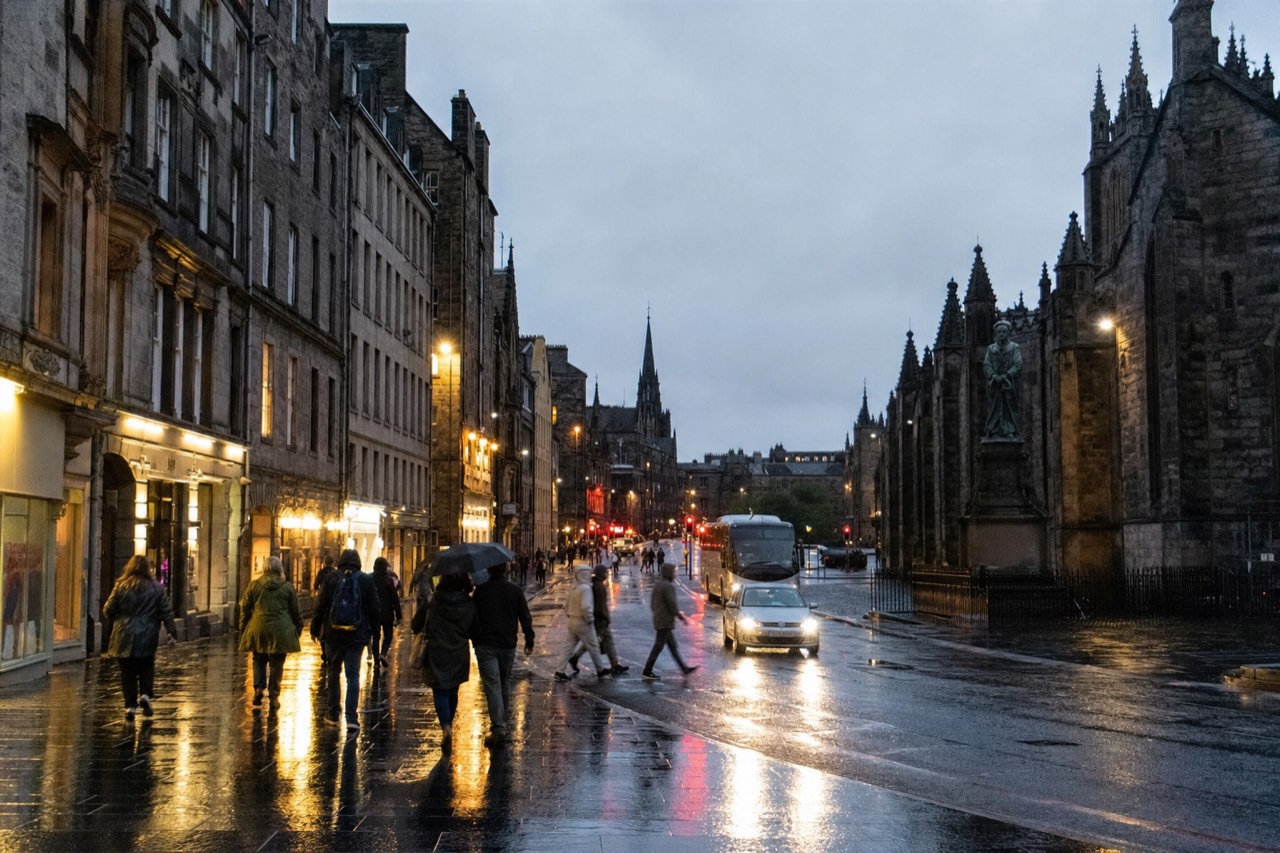
The question turns up constantly in search suggestions, and it deserves a straight answer rather than a shrug. Here it is: no official source in Scotland names a "dodgiest" place, because "dodgy" is not a category anybody measures. What exists instead is accredited crime data by council area, police advice aimed at the public, and a fairly consistent pattern of what actually goes wrong for visitors. This page will not name a town as the country's worst, because doing so would mean repeating an internet ranking that no statistics body publishes.
That refusal is not evasion. The useful version of this question is "where and how do people actually run into trouble in Scotland," and that one has real answers.
Those three are here for a different reason than the topic, and it is worth saying so plainly: none of them answers a safety question. They are simply what a guided day out looks like if you would rather have a driver, a route and a guide than work a city out cold on your first evening.
What the official numbers actually count
The Scottish Government publishes Recorded Crime in Scotland, a set of accredited official statistics drawn from Police Scotland's own records. In 2025-26 police recorded 315,357 crimes, up 5% from 299,111 the year before and the highest total since 2014-15. Set against the long run, though, recorded crime is down 49% from its 1991 peak. Both of those facts are true at the same time, and any honest read of the numbers has to carry both.
What those statistics do not do is rank places by menace. They count recorded crimes, broken down by type and by council area, with all the known limits of recorded-crime data: it reflects what gets reported and how it gets classified, not the lived feel of a street. A council area with a higher recorded rate often has a large city centre inside it, which is where a nation's shops, pubs, football grounds and nightlife all sit. That is a density story more than a danger story, and it is why a league table of council areas is a poor guide to whether a visitor will have a problem.
What actually catches visitors out
Petty theft in crowds. That is the honest headline. Busy tourist streets, festival crowds, packed pubs and railway concourses are where wallets and phones go missing, and Edinburgh's Royal Mile, with its narrow closes and heavy foot traffic, is a textbook environment for it. Police Scotland's own advice on protecting valuables is unglamorous and effective: keep bags zipped and in front of you, do not leave a phone or wallet on a café table, carry only the cash you need, and use ATMs inside banks or shops where you can.
Car break-ins at rural trailheads and viewpoint car parks are the second recurring one. An unattended car with visible luggage is the target, not the driver. If your plan involves leaving a hire car at a walking route for four hours, the bags travel with you or they stay out of sight before you park, not after.
Late-night city centres are the third, and the pattern is the same in Glasgow, Edinburgh, Aberdeen or Dundee as it is in any UK city of similar size: trouble clusters around closing time, around alcohol, and overwhelmingly between people who already know each other. Visitors are rarely the target. The practical version of this advice is to plan how you are getting back before you go out, which is duller than a danger map and considerably more useful. If you are working out how to spend an evening in either city, things to do in Glasgow and an Edinburgh planning walkthrough both cover the areas that stay busy and well lit.
The risks that genuinely injure tourists are outdoors
This is the part the "dodgiest place" framing misses completely. In Scotland, the incidents that put visitors in hospital are overwhelmingly weather, water and terrain, not crime. VisitScotland's outdoor safety guidance exists because hill weather turns fast, daylight runs out earlier than people plan for, and cold water is dangerous even on a warm day.
Two specifics that catch drivers in particular. Most Highland, Skye and island roads are single-track with passing places, and the etiquette is not optional: pull into a passing place on your left for oncoming traffic, stop opposite it if the passing place is on your right, give way to traffic coming uphill, and never park in one. Road Safety Scotland publishes the visitor version of this, and it is the difference between a relaxed drive and a wing mirror. Anyone who would rather not learn passing-place etiquette on the day can ride a guided Skye day out of Inverness and leave the driving to a local.
The other is alcohol. Scotland's drink-drive limit is stricter than the rest of the UK at 22 micrograms per 100ml of breath, low enough that a single drink at lunch is a genuine risk to your licence. Distillery tastings generally require you to be 18 or over, and many distilleries hand designated drivers a "driver's dram" to take home instead. That combination is one of the better arguments for a guided day rather than a hire car on a whisky trip. A castle, whisky and Kelpies day out of Edinburgh is one version of that, with somebody else at the wheel. It is a licensing convenience, not a safety measure.
Worry versus what happens
| What visitors worry about | What the evidence supports | The habit that fixes it |
|---|---|---|
| Walking into a "dangerous" town | No statistics body ranks places by dodginess; recorded-crime rates track population density and city-centre activity | Judge a street by how busy and lit it is, not by a forum ranking |
| Violent crime aimed at tourists | Rare; late-night incidents cluster around alcohol and between people who know each other | Plan the route home before the night out |
| Pickpocketing | The genuine, recurring visitor problem in crowded tourist streets and festival crowds | Bag zipped and in front, nothing loose on a café table |
| Car crime | Real at rural trailheads and viewpoint car parks, aimed at visible bags | Nothing visible in the car, ever |
| The hills and the water | The category that actually causes serious injury | Check the forecast, carry layers, respect cold water |
Two numbers worth having in your phone before you land: 999 for an emergency, 101 for anything non-urgent you still want the police to know about. If you are more concerned about the mistakes that spoil a trip than the ones that endanger it, the things visitors get wrong in Scotland is the companion piece to this one, and the Glasgow day tours section shows what a locally guided version of a first day looks like. The city centre walk with a Glasgow guide is the cheapest way to try that, at 4.8 stars from more than 1,500 reviews.
Same caveat as the band near the top of this page: none of these three answers a safety question, and none is being sold as one. They are what a day out looks like when somebody else drives, which is a preference about alcohol limits and unfamiliar roads rather than a claim about risk.
Is Scotland safe for tourists?
Broadly yes, on the evidence available. Recorded crime is down 49% from its 1991 peak, and the incidents visitors actually experience are dominated by opportunistic theft in crowded places rather than violence. The genuinely serious risks for travelers here are outdoor ones: hill weather, cold water, and unfamiliar single-track roads.
Which city is safer, Edinburgh or Glasgow?
Neither is meaningfully unsafe for a visitor, and the published statistics are not built to answer the comparison in the way people want. Both are large cities where late-night incidents cluster around closing time in nightlife districts, and where daytime crowds carry a pickpocketing risk. The same precautions work in both.
Why will this page not name the dodgiest place?
Because no accredited source publishes that ranking. The lists that circulate online are built from opinion polls, forum threads or selective readings of council-level crime counts, and naming a real town on that basis would mean asserting something about a place we cannot back with a citable source. The national statistics collection and Police Scotland's public advice are linked above so you can read the real data yourself.