
Isle Of Skye Midges And The Best Time For A Tour
Updated November 3, 2026
Midges are tiny biting flies whose summer season shapes Skye tour planning more than rain does. The season runs late May to mid-September, peaking July to early August, and the quiet windows on either side of it are also the best-value months to travel.
Short answer
Midge season on Skye and in the western Highlands runs from late May to mid-September, with the worst biting from July to early August. May, June and September are the practical sweet spots: midge pressure is lower, daylight still runs 13 to 17 hours, and shoulder-season tour and accommodation prices undercut the August peak.
Midges, not weather, are the single most common reason travellers move their Skye dates. The biting season on the island and across the western Highlands runs from late May to mid-September, and the worst weeks fall between July and early August, when warm, damp, windless evenings let clouds of them rise off the bog. The good news is that the months either side of that peak, May, June and September, are also when Scotland balances daylight, prices and crowds best. This page maps the season month by month, separates the midge myths from the measures that work, and shows how a guided tour structure quietly reduces your exposure.
When Is Midge Season On The Isle Of Skye?
Midge season on Skye and the western Highlands runs from late May to mid-September, with biting activity peaking between July and early August. The worst conditions are calm, humid and overcast days on the west coast, where there is no wind to disperse the swarms. May and September sit at the quiet edges of the season, and from October to April the island is effectively midge-free.
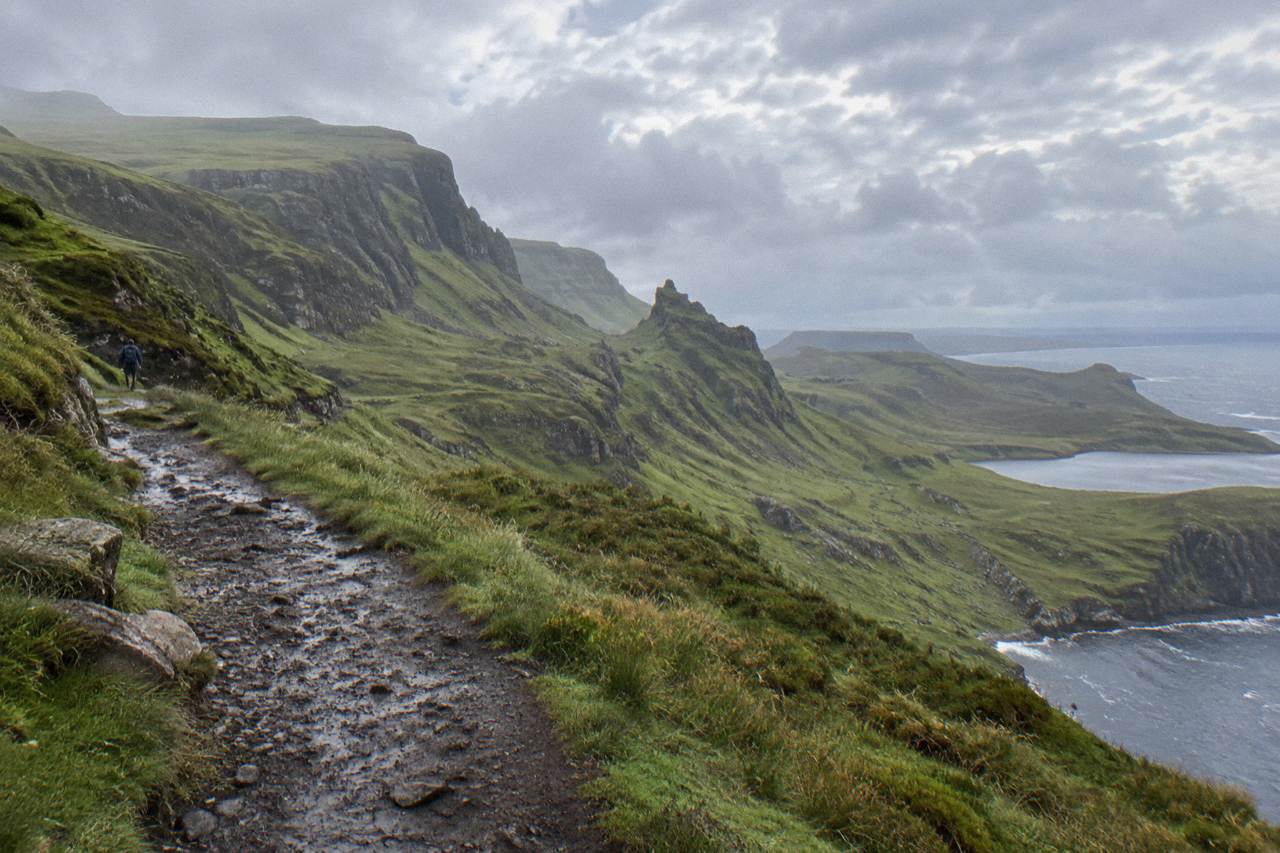
The Highland midge, Culicoides impunctatus, is about 1 millimetre long and breeds in damp peat bog, which Skye has in abundance. Only the females bite, and they need still air: reports from the west coast consistently note that a breeze of even a few miles per hour grounds them entirely. That is why exposed spots like the Storr or the Quiraing feel bearable on the same afternoon a sheltered glen two miles away feels unbearable. Elevation helps too, with reports noting activity drops above about 500 metres, though few Skye walks start that high.
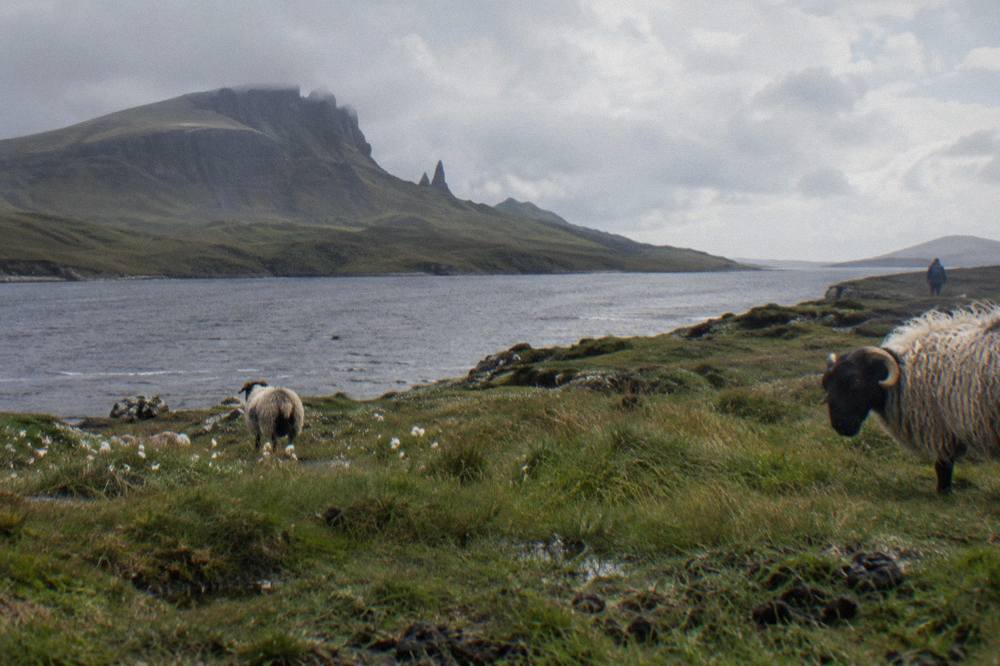
The practical takeaway for tour planning is that midge pressure is seasonal but also hourly. A morning at the Fairy Pools can be pleasant while a 6pm visit to the same car park, in still air after light rain, can drive people back to the car within minutes. Guided itineraries tend to hit the headline viewpoints earlier in the day, which is not a coincidence you should rely on, but it does align with how the insects behave. If you are still choosing which part of the island to build a trip around, the Isle Of Skye Tours: Which One To Book guide lays out the operator options by route and departure city.
| Month | Midge pressure on Skye | What it means for planning |
|---|---|---|
| March to mid-May | Effectively none | Cold nights keep them down; pack for weather instead |
| Late May to June | Season starts, moderate | Noticeable on still evenings, mild on breezy days |
| July to early August | Peak season | Worst in calm, humid, west-coast conditions |
| Mid-August to mid-September | Declining | First cooler nights cut activity sharply |
| October to April | Midge-free | No biting midges; short daylight is the trade-off |
How Bad Are Skye Midges Really?
For most visitors midges are an irritation rather than a trip-ruiner, but in peak weeks and sheltered locations the swarms genuinely drive people off walks. The intensity depends almost entirely on wind, time of day and terrain: a breezy coastal cliff can feel midge-free on the same evening a still glen is unbearable. Some people also react far less to the bites than others, so groups experience the same stop very differently.
Reports from travellers on Scottish subreddits repeatedly describe the same pattern: people who expected horror in May found almost nothing, while people caught on a windless July evening in a Glen Brittle forest described abandoning a walk inside ten minutes. The bites themselves cause itchy red spots that settle within a few days for most people. Scotland's visitor areas are also, for the record, very safe overall, and standard travel guidance treats midges as a nuisance rather than a health hazard.
A useful framing is that midges punish stillness. The travellers who suffer most are those sitting outside a pub garden at dusk in July; the ones who barely notice are walking a ridge in a breeze at 10am. That is why boat trips, open-top minibus tours and coastal viewpoints all rate better in midge terms than forest picnics. If your plan involves the Fort William end of the route, the Is The Jacobite Steam Train Worth Adding To A Scotland Trip? post covers the steam train option, whose standard adult day return costs £76 in the 2026 season.
The other honest point is that Skye is not uniformly bad. The island's east coast, the Storr and the Trotternish cliffs above Portree catch more wind than the wetter south around the Fairy Pools and Glen Brittle. Drive times are short enough that a guide can shift the day: Portree to the Old Man of Storr is roughly 7 miles and 12 minutes, while Portree to the Fairy Pools is about 23 miles and 35 minutes, part of it on single-track road. An operator with local knowledge makes those calls daily.
What Actually Works Against Midges?
The measures with the strongest track record are a proven repellent such as Smidge, covering exposed skin at dawn and dusk, avoiding sheltered boggy ground on still evenings, and choosing breezy, exposed locations. Citronella, wristbands and eating marmite or garlic score consistently poorly in traveller reports. A head net costs a few pounds and is the reliable last resort for camping or photography in peak weeks.
Repellent is the front line. Smidge, a Scottish-made diethyltoluamide-based repellent developed partly in response to the Highland midge, is the one product locals and guides recommend almost universally, and it is sold in every outdoors shop in Inverness and Portree. Apply it before you get out of the vehicle rather than at the trailhead, since midges find you within seconds in still air. Loose long sleeves, trousers and a light hat reduce the skin available without turning a July walk into a winter one.
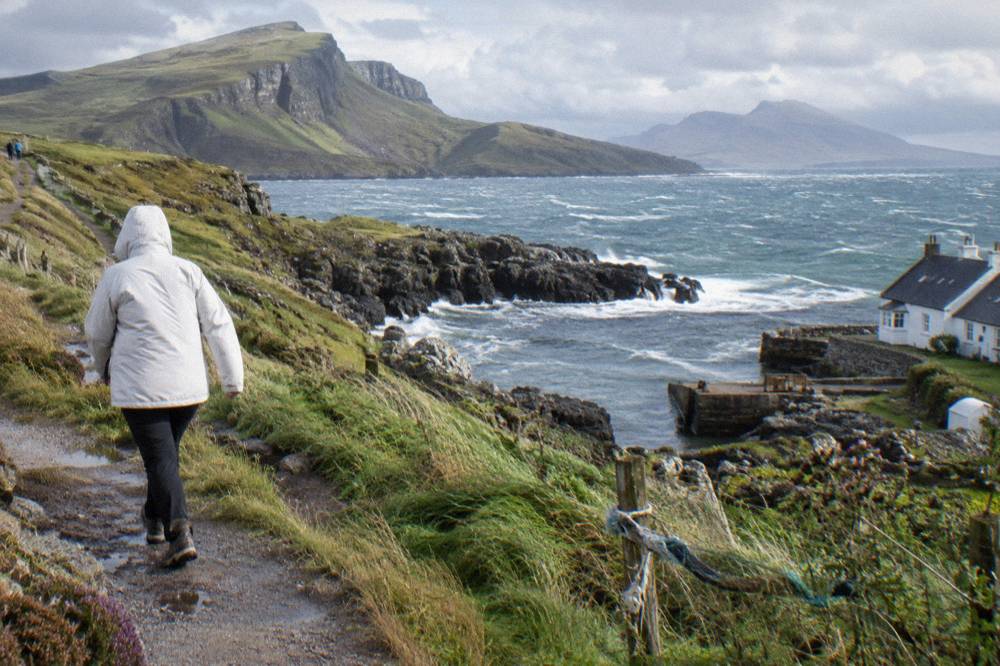
Timing and terrain matter as much as chemicals. Midges are worst from late afternoon through dusk in calm, humid conditions, so a 9am start at the Fairy Pools, where the roughly 2.4 km return walk takes 20 to 30 minutes each way, is a different experience from a 7pm one. The official Fairy Pools access page covers the parking charge and route details. Up on the Storr path, a steep 3.8 km round trip of about two hours, the exposure does much of the repellent work for you, and the Highland Council parking review sets out the current charges there.
| Method | Reported effectiveness | Notes |
|---|---|---|
| Smidge or DEET repellent | High | Apply before leaving the vehicle; reapply after rain |
| Head net | High in severe swarms | Essential for camping or still evening photography |
| Long loose clothing | Moderate to high | Physical barrier; midges can bite through tight fabric |
| Wind and elevation | High | Pick breezy, exposed viewpoints over sheltered glens |
| Citronella, wristbands, garlic | Low | Consistently poor reports from travellers and guides |
Which Months Are Best For A Skye Tour?
May, June and September are the best months for a Skye tour, combining lower midge pressure with 13 to 17 hours of daylight and shoulder-season pricing. July and August bring the warmest weather but also peak midges, peak crowds and peak prices. November to March is midge-free and cheapest, but daylight shrinks to 7 to 10 hours and some seasonal services close.
The month arithmetic is straightforward. Edinburgh averages about 16 to 17 hours of daylight in May, 17 to 18 in June and 13 in September, against 7 to 8 hours in midwinter. Daytime highs run around 15°C in May, 18°C in June and 17°C in September, with monthly rainfall broadly similar across all three. In other words, you give up almost nothing in conditions by skipping July and August, and you gain quiet trailheads, available accommodation and far fewer bites. For the full month-by-month picture, the Scotland Weather By Month guide carries the complete table.
September deserves a particular mention. The first genuinely cold nights usually arrive mid-month and collapse the midge population, the heather is in flower, and tour operators are still running full summer schedules. Travellers asking about timing on Reddit's Scotland threads are pointed at May and September more than any other months, and the reasoning is always the same: the same scenery, with a fraction of the insects. If you are working out how to reach the island in the first place, the Edinburgh To Skye: Tour, Train Or Drive? comparison covers the three options with times and costs.
| Month | Approx daylight | Edinburgh average high | Midge risk | Tour-season note |
|---|---|---|---|---|
| May | 16 to 17 hours | 15°C | Low to moderate | Shoulder prices, full schedules |
| June | 17 to 18 hours | 18°C | Moderate | Longest days of the year |
| July | 17 hours | 19°C | High | Peak crowds and prices |
| August | 15 hours | 19°C | High, easing late | Fringe season in Edinburgh too |
| September | 13 hours | 17°C | Low after mid-month | Quietest good-weather month |
Do Guided Tours Help You Avoid Midges?
Guided tours reduce midge exposure indirectly rather than eliminating it: minibus itineraries hit exposed viewpoints at set times, keep you near the vehicle, and let a driver-guide reroute around still, sheltered conditions. Tours cannot change the weather or guarantee a breeze, but they remove the two riskiest behaviours, lingering at dusk in a boggy glen and being stuck without a fallback plan when a stop turns swarming.
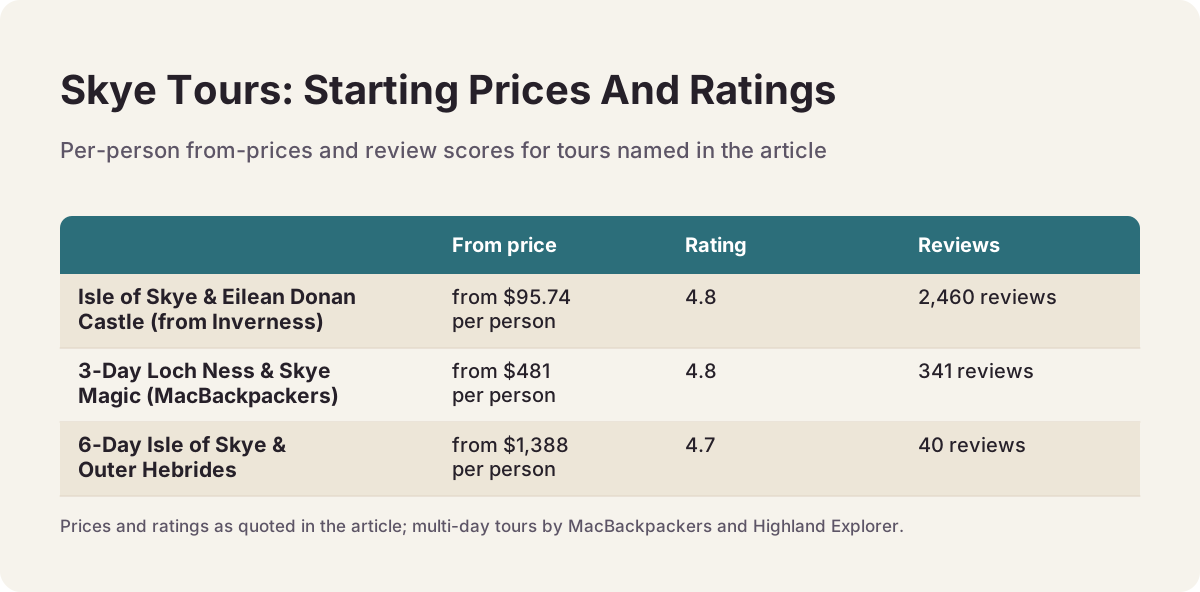
A day tour of Skye from Inverness typically runs about 12 hours and covers the island's headline stops with a guide who makes the same calls every week through the season. Two versions of that itinerary sit on this site: the isle of skye & eilean donan castle (from inverness) from $95.74 per person, rated 4.8 across 2,460 reviews, and the isle of skye and eilean donan castle day tour from inverness from $93.59 per person, rated 4.7 across 4,787 reviews. Both price the transport and guiding; Eilean Donan Castle entry, at £13 for an adult, is paid locally.
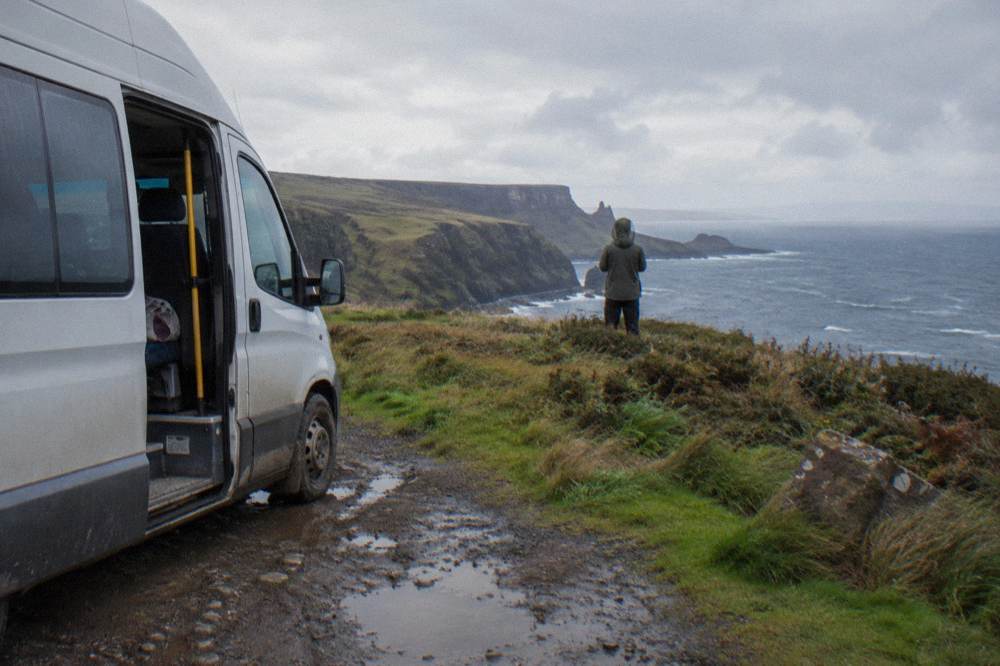
The structure matters more than the vehicle. A tour day is built around photo stops of 15 to 30 minutes, mostly at open, breezy locations like Kilt Rock, the Storr viewpoint or Eilean Donan's bridge, rather than the sheltered woodland paths where midges concentrate. You are also never far from the vehicle, which is the one place the insects cannot follow. Independent travellers who get caught out at a still-evening Fairy Pools have a 35-minute drive back to Portree ahead of them; a tour group is back on the road within the half hour by design.
Multi-day options tilt the same way. The 3-Day Loch Ness & Skye Magic tour from MacBackpackers runs from $481 per person and is rated 4.8 across 341 reviews, while Highland Explorer's 6-Day Isle of Skye & Outer Hebrides itinerary runs from $1,388 per person and is rated 4.7 across 40 reviews. Neither promises midge-free walking, because no honest operator can, but both keep groups on a moving, viewpoint-led rhythm through the worst hours. For a broader comparison of the small-group format, Small Group Tours Of Scotland: Are They Worth It? weighs the pros and cons against self-driving.
One seasonal wrinkle worth checking before you book any Skye tour: Eilean Donan Castle closes to visitors from 23 December 2026 to 1 February 2027, when tours stop for a photo opportunity only. Outside that window the castle is open most of the year, and the sea-loch setting around it is breezy enough that midges are rarely the story there. Deciding between the two Skye day tours is mostly a matter of price and departure convenience, and the operator's live listing shows the current times.
Common Questions About Skye Midges And Tour Timing
When is midge season in Scotland?
Midge season on Skye and the western Highlands runs from late May to mid-September, with biting activity peaking between July and early August. The east coast, including Edinburgh, sees far less pressure. From October to April the country is effectively midge-free.
How do you avoid midges on the Isle of Skye?
Use a proven repellent such as Smidge applied before you leave the vehicle, cover exposed skin at dawn and dusk, choose breezy exposed viewpoints over sheltered boggy glens, and avoid sitting still outdoors on calm, humid evenings. A head net is the reliable fallback in peak weeks.
What is the best month to visit Skye without midges?
May and September are the practical answers. May sits just before the season builds, and mid-September onward sees activity collapse after the first cold nights, while both months keep 13 to 17 hours of daylight and shoulder-season prices. October is midge-free but wetter and darker.
Are midges worse on Skye than mainland Scotland?
The west coast, Skye included, reports the worst midge conditions in the country because of its damp peat terrain and frequent still, humid air. The east coast and urban areas like Edinburgh and Glasgow see far less activity in the same weeks.
Do midges bite everyone?
Midges bite most people they land on, but roughly a third of people show little or no reaction to the bites, which is why groups on the same walk report it so differently. Reactions to bites settle within a few days for most people.