Should You Combine Ireland and Scotland in One Trip?
Ferry times, flight options, how many days it really takes, and the honest case for picking one country instead of two.

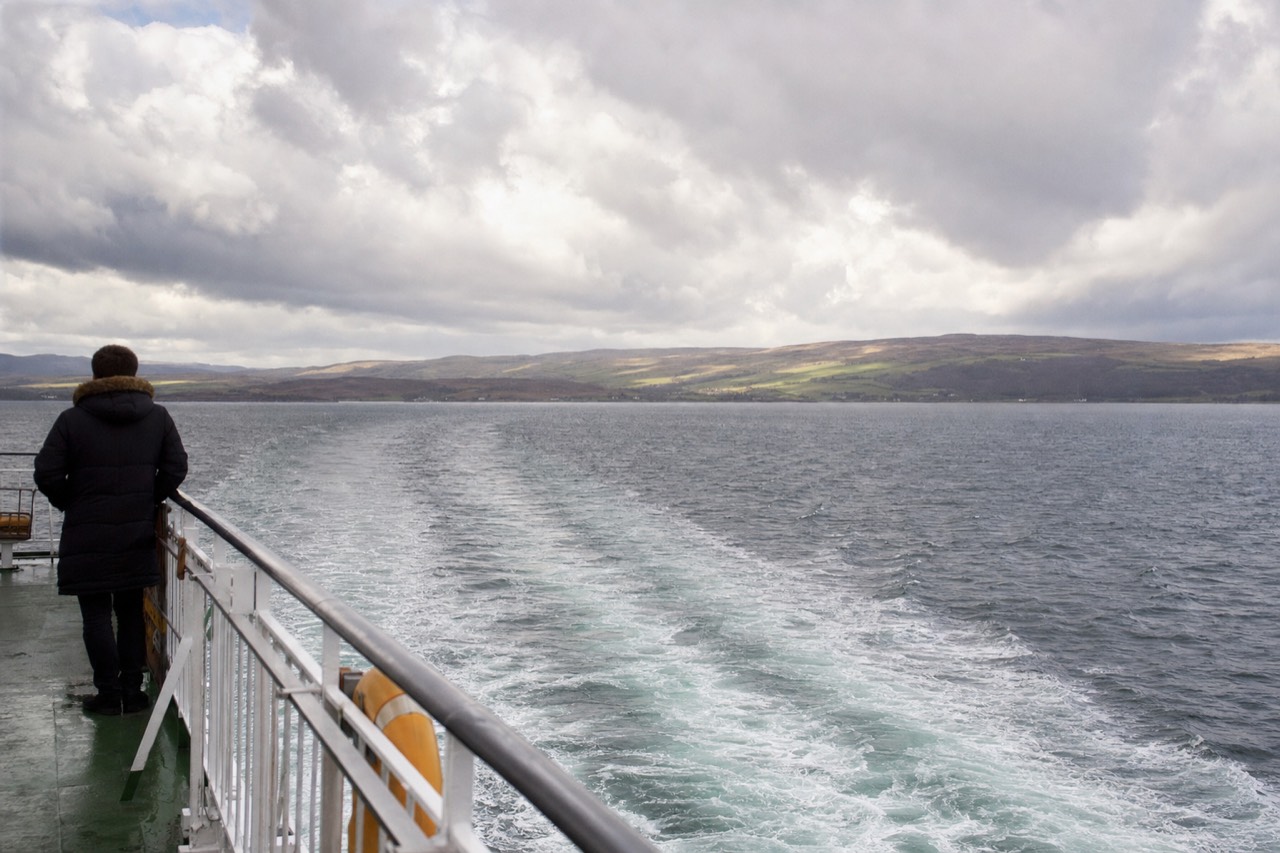
Cairnryan to Larne takes two hours. That is the shortest scheduled sea crossing between Great Britain and the island of Ireland, and it is the fact that makes this whole question worth asking. Two countries, two hours of water, one apparently obvious itinerary.
The obvious itinerary is where most of the trouble starts. Say this clearly first: there is no combined Ireland and Scotland tour on this site. Every package in this roster stays inside Scotland. Nobody here sells the crossing, the Irish half, or a two-country route, and nothing below is an attempt to sell you one. This is a decision guide, written because the question comes up constantly and the honest answer is more useful than a product that does not exist.
How do you actually get between them?
Three realistic options, and they suit very different trips.
| Route | Operator | Typical crossing | Suits |
|---|---|---|---|
| Cairnryan to Larne | P&O Ferries | About 2 hours | Drivers with a hire car |
| Cairnryan to Belfast | Stena Line | About 2 hours 15 minutes | Drivers, more daily sailings |
| Glasgow or Edinburgh to Belfast or Dublin | Scheduled flights | Around an hour in the air | Anyone travelling without a car |
The ferry looks cheap on a map and expensive on a clock. Cairnryan sits in Dumfries and Galloway, in the far southwest corner of Scotland, which means a long drive down from Edinburgh and a very long one from anywhere in the Highlands before you even reach the terminal. There is no railway station at Cairnryan either. The nearest is Stranraer, a few miles down the coast, linked to the port by a sparse bus service timed loosely around sailings, so foot passengers have a fiddly last leg at both ends.
Flying is faster and usually simpler, but it costs you the car. Hire companies set their own rules about taking a vehicle across the water, and a rental dropped off in a different country from where it was picked up carries its own charge. Read the rental terms before you assume the car comes with you.
How much time does it really need?
Use the real itineraries as a yardstick rather than a guess. The multi-day packages on this site run 3, 5, 6 and 8 days for Scotland alone, and even the longest of them, an eight-day route with hotels booked in through Glasgow, Loch Lomond, Skye, Loch Ness, Culloden and St Andrews, does not reach Orkney or the Outer Hebrides. Scotland at a sane pace is already a week or more.
Ireland does not compress any better. Add two transit days for the crossing and the drive to and from the port, and a ten-day trip becomes roughly four days per country. That is enough to see Edinburgh and Dublin, and almost nothing else.
The rough rule that comes out of the arithmetic: under ten days, pick one. At twelve to fourteen days the combination starts to work, and only if you accept that each country gets a single region rather than a tour.
The six-day western isles itinerary makes the point neatly. Six days, all of it inside Scotland, and it spends most of them getting west and back.
What changes when you cross?
More than people expect, and the surprises are all administrative.
The Republic of Ireland uses the euro. Northern Ireland and Scotland use pounds sterling, so a two-country trip means two currencies and a border crossing on the island of Ireland itself. Both countries drive on the left, which is one thing you do not have to relearn.
If your trip involves driving in Scotland, two rules are worth knowing before you set off. Scotland's drink-drive limit is stricter than the rest of the UK at 22 micrograms per 100ml of breath, published on mygov.scot, which matters a great deal on a trip built around distilleries on both sides of the water. Many distilleries hand designated drivers a dram to take home instead.
The other is road etiquette. Most Highland and island roads are single-track, and Road Safety Scotland sets out the convention: pull into a passing place on your left for oncoming traffic, stop opposite one that sits on your right, give way to anything coming uphill, and never park in a passing place. Drivers who have only ever met Irish country lanes tend to learn this the hard way.
What do you actually give up?
The far west and the islands, almost always. Skye, Harris, Lewis and Orkney all sit behind ferry legs of their own, and those legs are weather-dependent. Sailings on the Skye and Hebrides routes get cancelled or rescheduled for wind and swell often enough that operators build the possibility into their advice, and in winter Highland snow gates can close specific routes outright, which Traffic Scotland reports as it happens.
That is the honest cost of splitting a fortnight across two countries. The parts of Scotland that people remember most vividly are the parts furthest from an airport, and they are the first things a two-country itinerary deletes.
Glasgow is the one place where the combination genuinely helps. It is Scotland's practical hinge for this trip: closest of the big cities to the Cairnryan ferry road, with short flights to both Belfast and Dublin, and enough in the city itself to justify the stop rather than treating it as a departure lounge. A guided walk through the city centre fills a spare morning before a sailing, and our Glasgow city guide covers what fills a full day there.
If you are doing it anyway, what shape works?
Fly open-jaw. Into Dublin and out of Edinburgh, or the reverse, so you never repeat a leg. Treat Belfast as the hinge if you want the ferry, since it puts the crossing at the midpoint rather than at the end of a long drive.
Then give each country one region and stop apologising for it. Dublin plus the east coast, then Edinburgh plus one Highland loop, works. Dublin, Galway, Belfast, Edinburgh, Skye and Glasgow in twelve days does not, whatever the map suggests.
Season matters too, and it is the same season on both sides of the water. The month you choose does more for a trip like this than any routing decision, and the case for each month is worth reading before you book flights.
If you are focusing on Scotland alone
Here is what a dedicated Scotland package actually looks like, since that is the honest alternative on offer here rather than a combined tour. The multi-day packages on this site run from a 3-day hostel-style Loch Ness and Skye loop up to an 8-day 4-star coach itinerary, with the routes, ferry legs and lodging already booked in. Duration is the real variable: our guide to what those packages cost breaks the price difference down properly.
If you would rather build it yourself, day trips out of Edinburgh will cover Loch Ness, Glencoe and Stirling from a single base, and there is a full comparison of booking a coach tour versus driving yourself if you are still weighing the two.
Can you see Ireland and Scotland in one week?
Realistically, no. A week split across two countries leaves roughly three days each once travel days are subtracted, and both countries need a base city plus at least one region to feel worthwhile. A week is enough for Dublin and Edinburgh as city breaks, and not much more. Ten days is the earliest point at which the combination stops feeling rushed.
Is the ferry cheaper than flying between Scotland and Ireland?
It depends entirely on whether you are bringing a vehicle. Foot passengers usually find the flight cheaper once the drive to Cairnryan and the awkward transfer from Stranraer are counted. Drivers who want the same car in both countries have a stronger case for the ferry, though hire companies set their own rules about crossing. Fares on both move with date and demand, so price your exact dates rather than assuming one is always cheaper.
Does this site sell a combined Ireland and Scotland tour?
No. Every tour and package listed here operates within Scotland only. There is no Ireland leg, no ferry crossing and no two-country itinerary in this roster, and no plan to imply otherwise. If a combined trip is what you want, you will be booking the two halves separately.